.png)
Power For Robotic Mowers
- Dale Kleffman
- Apr 19
- 3 min read

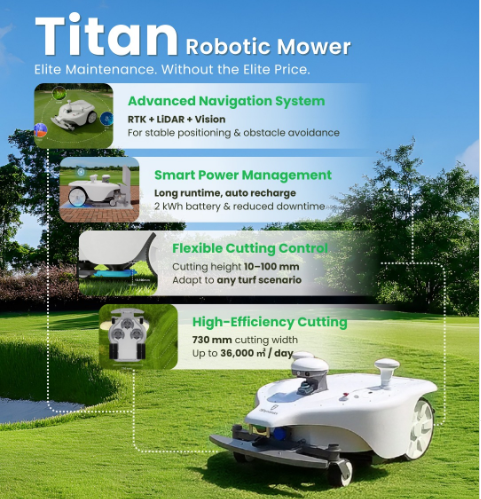
Most robotic mowers use batteries to function. These are rechargeable and most typically allow somewhere between a couple hours and the bulk of a work day in performance before needing recharging. Most modern robotic mowers will return to the charging station automatically when batteries reach a certain level and then resume the task where they left off after recharging. Some mowers offer a hot swap technology to minimize mower downtime and allow battery switching instead of waiting for recharging.
There are some robotic mowers that utilize internal combustion engines for a power source but the vast majority of these are not autonomous in nature. Right now the majority of the market for robotic mowers utilizing internal combustion engines is within larger units that are typically used for more of a brush type applications or major slope applications where more a bigger machine with more power and range/size is needed and the unit is controlled with a person operating a handheld remote. These type of units are tens of thousands of dollars.
Small residential mowers typically use very minimal wattage when charging and at idle when connected to a charging station. The average cost for a residential mower hooked up to an outlet and powered through the grid runs between $6.00 and $10.00 per year, this number can vary depending on total usage, cost of power, and the length of your mowing season. Larger commercial mowers with bigger batteries and more frequent and sizeable usage will draw more but the cost will not break the bank or be any sort of real high draw. Some older mowers still use a boundary wire and that can also be a small draw even with nothing on the charging station. More modern mowers often have a reference station for RTK which is something mounted near where the mower operates and communicates with satellites or other ground reference stations. These are a very low draw as well that is separate from the charging station. The most modern mowers are using some combination of a net based RTK system and/or LiDar which doesn’t require a separate device or separate power draw.
Another option other than a standard outlet for power is solar. Solar is a great fit for robotic mowers for a couple reasons. One reason being that it allows the mower to be set up and operate from anywhere the solar panels and solar battery system is set up. This can be the side of a yard or wherever one wants it. Many people only have power in certain areas near their garage or house so using solar gives one more freedom in determining the location of mower. Solar can also prove to be a reliable source for remote power. This is particularly useful for more remote applications like rural cemeteries, roadside parks/rest areas, or golf course holes where there may not be any source of grid supplied power within a reasonable distance. There is some additional cost in setting up a solar power system to power a charging/base station but these are often seen for $500 - $2000 when you factor in a complete set up with battery, solar panel/s, and inverter system. One will also not have any recurring power charges to pay for once powered by solar. That cost is unlikely to every pay for the solar equipment needed but it is a factor. Modern solar batteries are often rated for several thousand cycles so this can be a long term solution.


Comments