Robotic Mowing for Municipal Property & School Districts
Maintain More Grounds. Make Better Use of Your Crew.
Public grounds departments and school districts face expanding turf acreage, strict budget boundaries, and relentless hiring bottlenecks. Lawnamation helps grounds managers deploy practical commercial robotic mowing on suitable routine routes—freeing experienced municipal crews to focus on skilled landscaping, arboriculture, turf quality, and athletic readiness.
Real Landscaping Experience. Proven Equipment Applications. Regional Training and Support.
Stop Your Most Valuable Resource from Mowing Routes
Commercial mowing and line painting requires hundreds of labor hours each season. When public-sector operators are locked onto zero-turns every sunny day, high-priority maintenance falls behind across parks, athletic complexes, and campuses. Operational Reality: Autonomous mowing is another tool to automate suitable repetitive mowing so grounds managers can apply their crew’s expertise, judgment, and precision work where it matters most.
Limited Staff Capacity
Hiring seasonal and full-time grounds professionals remains unpredictable. Autonomous equipment relieves the constant strain of unfilled positions on routine acreage.
Equipment & Operating Costs
Conventional heavy mowing equipment carries substantial fuel burn, frequent deck and hydraulic maintenance, and accelerated asset depreciation.
Multiple Properties & Schedules
Coordinating trailering, traffic delays, and crew relocations across dispersed municipal or school district parcels consumes critical daylight and logistics time.
Public Expectations
Taxpayers and school boards expect pristine turf aesthetics and athletic safety regardless of weather hold-ups or staffing constraints.
Commercial Robotic Mowing for the Properties You Manage
Public grounds present diverse boundary layouts, safety considerations, and access profiles. Here is how commercial robotics apply across typical public municipal and institutional facilities.
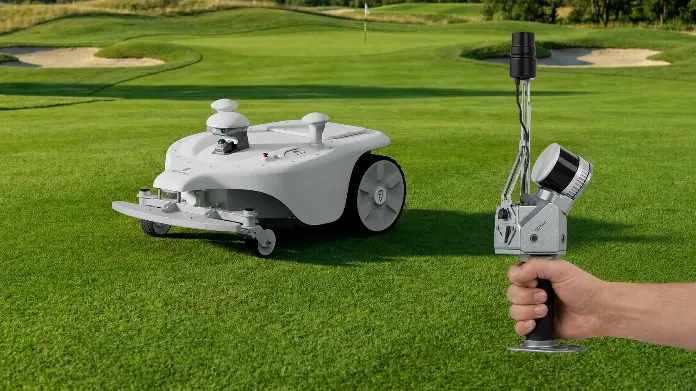
Municipal Parks
Open community green spaces, picnic lawns, and passive recreation grounds benefit from regular perimeter-mapped automated maintenance without noise disruption.
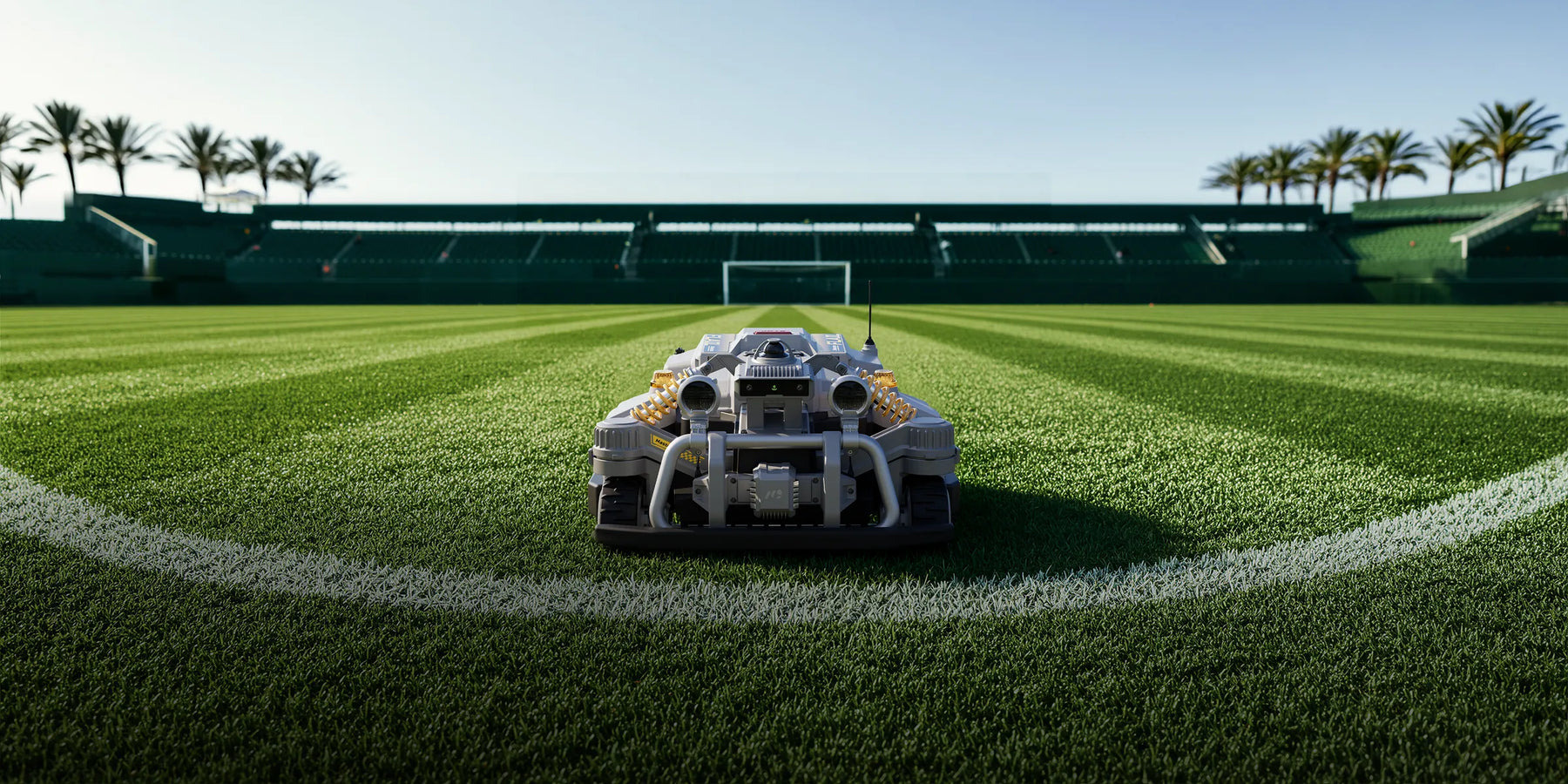
School District Campuses
Elementary, middle, and high school lawns require quiet, zero-emission operation during class hours and dependable maintenance across school breaks.
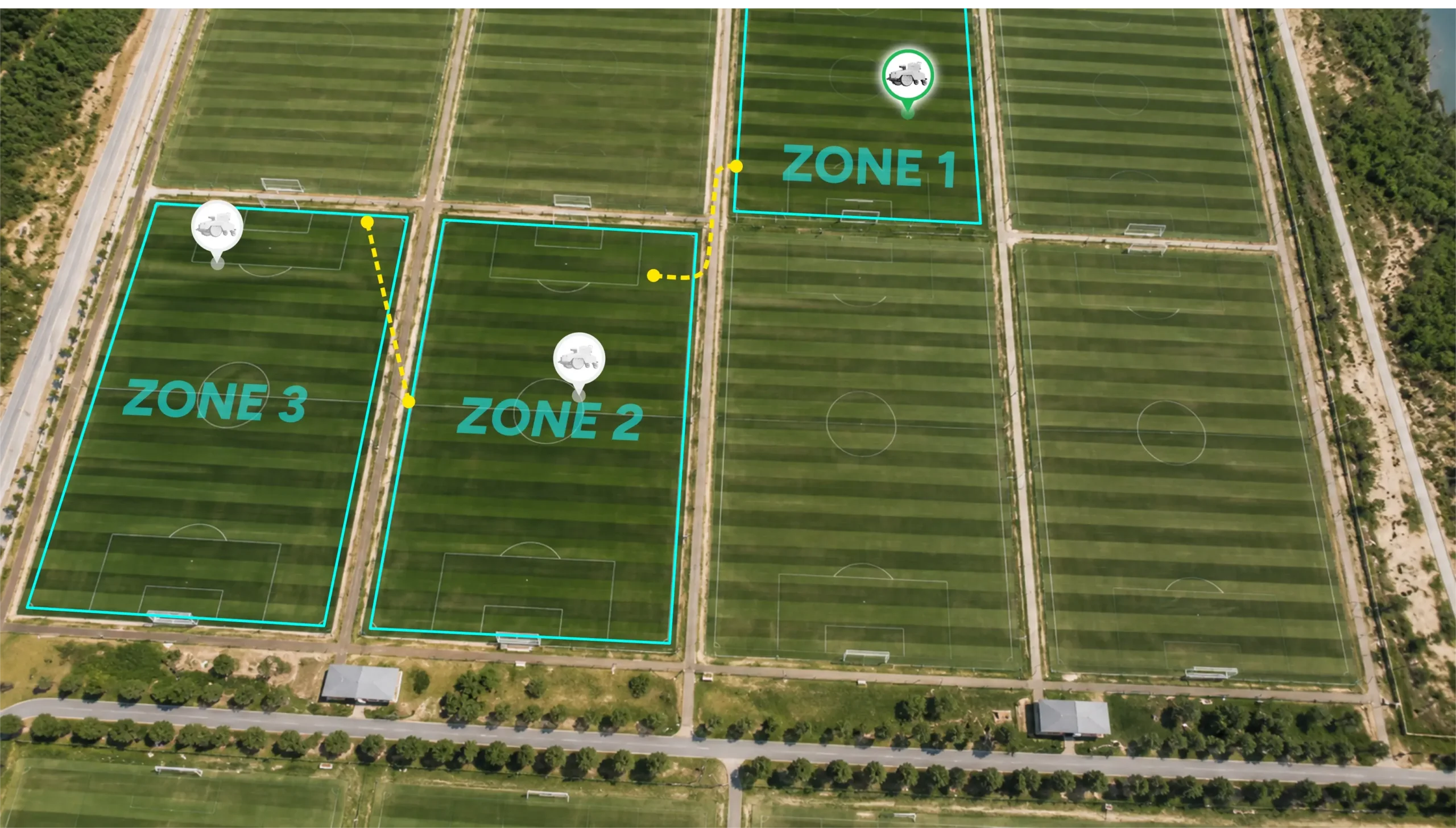
Athletic Fields & Sports Complexes
Frequent micro-cutting improves turf density and athletic surface consistency across soccer, baseball outfields, and practice areas between game schedules.

Municipal Buildings & Civic Grounds
City halls, public libraries, airports, and administrative facilities maintain clean, polished turf appearances for visiting residents and civic events.
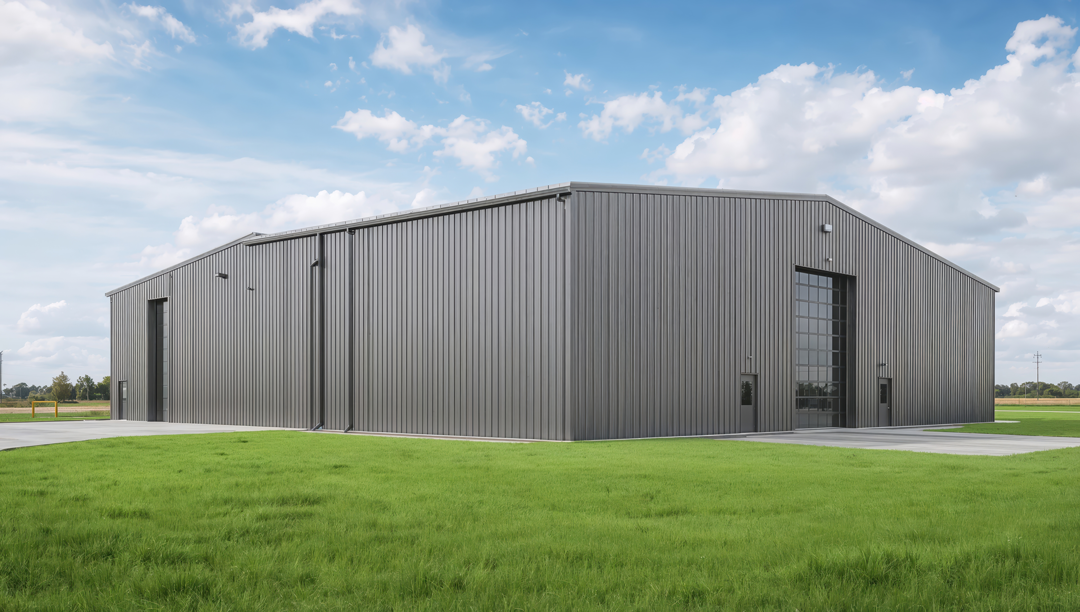
Public Works & Utility Properties
Water retention basins, utility substations, and maintenance facility boundaries require routine vegetation control without risking operator fatigue on awkward parcels.
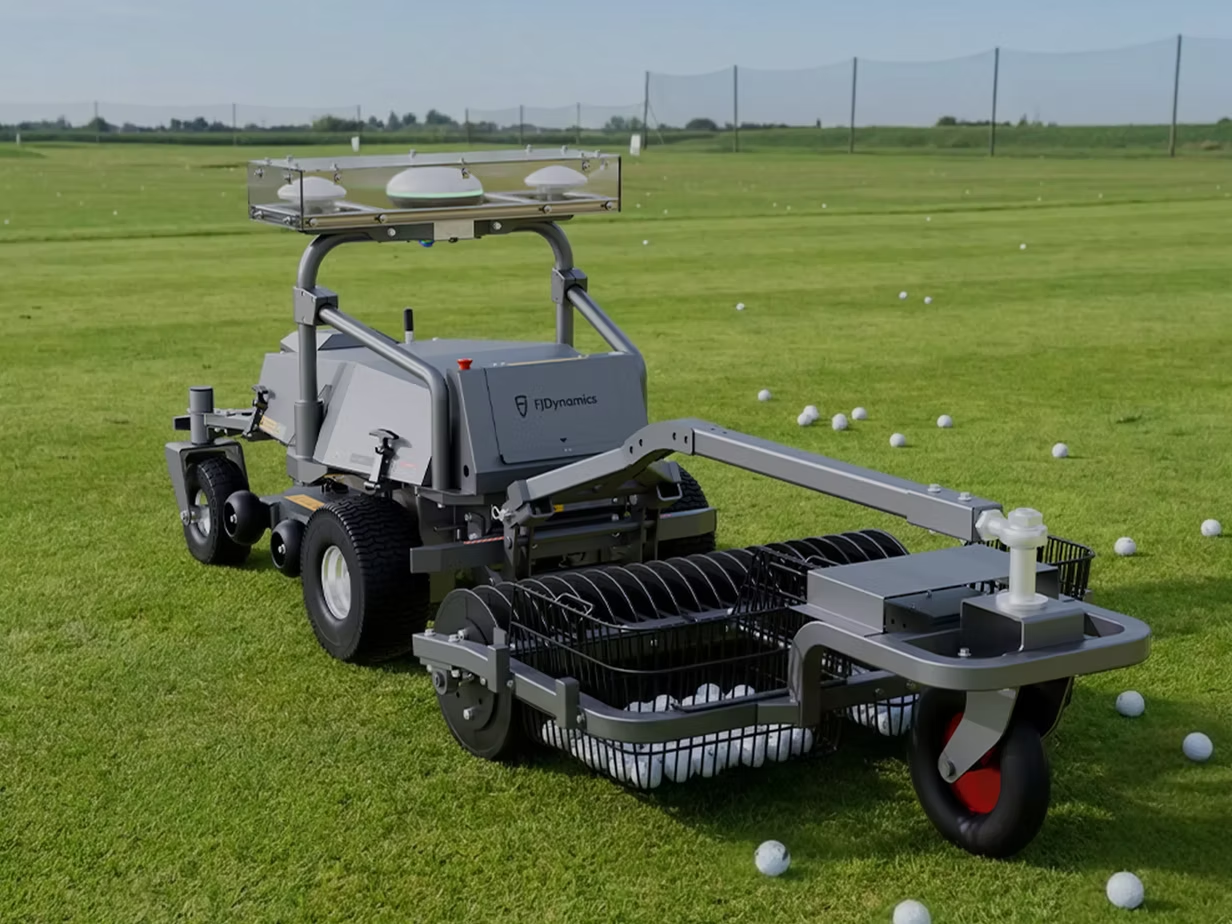
College & University Grounds
Expansive quads and student housing green belts demand low decibel profiles, zero exhaust fumes, and continuous maintenance that does not impede foot traffic.
Need to review parcel suitability?
We examine satellite boundaries, obstacles, and slope characteristics for your district.
We’re Not Just Selling Robots. We Understand the Work.
Lawnamation operates as a commercial robotics division of Musson Landscaping LLC. Based in Northern Wisconsin and serving Michigan’s Upper Peninsula and surrounding Midwest communities, we bring hands-on commercial landscape contractor roots to public-sector robotics evaluation.
Experienced Landscaping Operators
We run grounds equipment daily. We evaluate turf species, wet spring ground, and seasonal growth spikes with an operator’s eye, not a software sales script.
Multiple Manufacturer Options
We are not tied to a single robotic platform. We assess your physical acreage, slope profiles, and budget boundaries before recommending suitable hardware.
On-Site Demonstrations
We bring commercial equipment directly to your school sports field or town park so your team and trustees can evaluate cut quality and navigation firsthand.
Training & Ongoing Support
Successful robotic integration requires proper staff hand-off, RTK station calibration, safety protocol setup, and reliable regional maintenance backup.
Municipal Robotic Mowing Savings Calculator
Compare the annual operating cost of conventional mowing with a proposed autonomous mowing program. Estimate crew hours available for other work, potential cash savings, and simple equipment payback using your own district or municipality's figures.
1. Your current grounds maintenance baseline
Enter current annual mowing costs, across the properties you want to evaluate. Include loaded labor costs (wages plus employer-paid benefits and taxes).
2. Automated alternative: site & staffing
Estimate what fraction of existing mowing could be handled by robots, and the human time required to support them. A site review should confirm these assumptions.
3. Automated alternative: equipment & recurring costs
Enter planned robotic fleet cost, installation, and annual energy and maintenance estimates. Use a vendor proposal where possible.
Your preliminary cost comparison
| Operating & capital variable | Current baseline | Automated alternative |
|---|---|---|
| Annual mowing staff hours | — | — |
| Annual direct mowing labor (economic cost) | — | — |
| Annual fuel / energy | — | — |
| Annual maintenance / wear / software | — | — |
| Annual conventional ownership / lease | — | — |
| Robotic equipment acquisition & installation (one time) | — | — |
| Annual economic operating cost (excludes capital) | — | — |
Table note: Automated alternative includes all remaining conventional mowing hours plus robot oversight, and any conventional costs not eliminated. Labor is shown at full economic value in the table, whereas net cash savings apply your selected labor-budget realization percentage. Robotic capital is one time, not included in annual operating costs.
Hours freed: (current annual mowing hours × automatable share) − (robot support hours per week × mowing weeks).
Annual cash savings: (hours freed × loaded wage × budget realization share) + (current annual fuel, maintenance, and ownership costs × eliminated share) − (robotic annual electricity, wear, service, and software).
Payback: total upfront robotic capital ÷ positive annual cash savings. Horizon cash impact: (annual cash savings × horizon years) − upfront capital.
This simple model assumes constant annual workload, rates and costs. It excludes grants, financing, taxes, replacement during the horizon, residual values, discount rates, inflation, downtime and extraordinary repairs. Annual ownership expense may be accounting cost, not cash: use only genuinely avoidable amounts when assessing cash savings. No claimed robotic acreage capacity is assumed.
We'll help evaluate your specific properties.
Site mapping and a live demonstration can help validate equipment selection, real operating capacity, staff oversight, safety requirements, and an accurate proposal.
Lawnamation · A division of Musson Landscaping LLC · Upper Midwest · 715-204-9784. Calculator data stays in your browser unless you choose to download or include a summary in your email.
Don’t Take Our Word for It. See Robotic Mowing on Your Property.
1. Tell Us About Your Grounds
Share your acreage, turf type, obstacle frequency, and current maintenance pain points.
2. Review Equipment Suitability
We assess satellite access, terrain slope, security, and power availability across your target parcels.
3. See the Equipment in Action
We demonstrate real commercial autonomous mowing on an approved test area on your site.
4. Evaluate the Next Steps
Review actual cut performance, crew feedback, and honest budgetary alignment before proceeding.
Frequently Asked Questions About Robotic Mowing for Public Grounds
Public-sector managers require factual clarity before introducing automated machinery to public facilities. Below are straightforward answers addressing safety, supervision, weather, and budgeting.
Are commercial robotic mowers suitable for open municipal parks?
Commercial robotic mowers can work effectively on open park acreage provided the parcel has clearly established boundaries, adequate satellite line-of-sight for RTK positioning, and acceptable slope angles. Highly congested picnic groves, heavy pedestrian transit areas, and rough, rocky turf still require manual zero-turn mowing or push equipment.
Can robots handle multiple school district campuses and sports fields?
Robots can manage dedicated athletic fields and individual school campus parcels. However, autonomous units cannot self-transport across public roads between separated schools. Units either reside within a secured, designated campus boundary or grounds staff must trailer them between locations.
Do commercial robotic mowers actually reduce overall grounds maintenance costs?
Cost reduction is property-dependent. Robotic mowing typically reduces direct labor hours spent operating zero-turns and cuts continuous fuel burn. However, savings are partially offset by capital acquisition or lease payments, electrical charging infrastructure, blade replacements, and daily staff oversight. We evaluate your specific acreage to establish true feasibility.
How do robotic mowers operate safely around students, staff, and the general public?
Commercial robotic systems utilize multiple layers of physical touch bumpers, ultrasonic distance sensors, lift-detection shutoffs, and geofenced software corridors. In public school and municipal environments, systems can be programmed to operate during off-peak hours, early mornings, or designated unoccupied windows to minimize public interaction.
Will robotic mowers replace our existing municipal or district grounds employees?
No. Autonomous mowers automate the repetitive task of straight-line mowing on suitable acreage. Grounds departments consistently report that robotics enable their teams to address deferred arboriculture, sports field leveling, irrigation repairs, building perimeters, and specialized landscape work that was previously neglected due to seasonal mowing backlogs.
What happens when it rains, or during adverse Midwestern weather?
Commercial mowers can cut damp turf, but extreme saturation, standing water, and heavy storms trigger integrated rain sensors that return the unit to its charging station. Operating through standing water risks soil compaction and tire rutting, so supervisory oversight remains necessary during wet spring Midwestern cycles.
How much maintenance and daily supervision do robotic mowers require?
Robots are autonomous, not maintenance-free. Grounds staff must perform regular deck cleanouts, inspect and rotate cutting blades, clear debris or tree branches from mapping corridors, and monitor charging connectivity. Ongoing oversight ensures continuous operational safety and performance.
Can robotic units handle hills, drainage basins, and complex landscape obstacles?
Manufacturer grade capabilities vary widely, typically handling slopes from 15 degrees up to 35 degrees depending on wheel configurations, all-wheel drive capabilities, and soil stability. Highly intricate flower beds, retention ponds with steep drop-offs, and dense woods lines require physical fencing or exclusion buffer mapping.
How are on-site demonstrations handled across Wisconsin, Michigan, Minnesota, and Iowa?
We consult with your grounds superintendent to confirm property eligibility, boundary dimensions, and power access. Our team then transports commercial demo equipment directly to your site to execute a live cutting trial so your crew and leadership can observe cut quality, travel patterns, and safety systems.
How do municipalities and school districts budget and procure commercial robotic mowing systems?
Public entities acquire equipment through annual capital improvement budgets, departmental operating leases, equipment finance agreements, or phased pilot programs. We assist directors with detailed specification packages, documented operational cost profiles, and demonstration data suitable for board presentations and procurement reviews.
Find Out Whether Robotic Mowing Makes Sense for Your Municipality or School District
Connect directly with our commercial grounds specialists. We will review your property aerials, discuss crew allocations, and determine whether an on-site field demonstration aligns with your seasonal goals.